

Plainsman Clays | P600
P600 High Fire Porcelain
$63.99 / 20 kg (44 lb) Pugged
$0
Suggested retail price. In-store prices and availability may vary by location.
High fired, White burning, Smooth, Medium plasticity, Vitreous, Porcelain clay body
Specifications
Type
High temperature porcelain · white burning · vitreous
Texture
Smooth and fine grained · medium plasticity
Usage
Throwing · hand building · functional ware · reduction and oxidation firing
Temperature
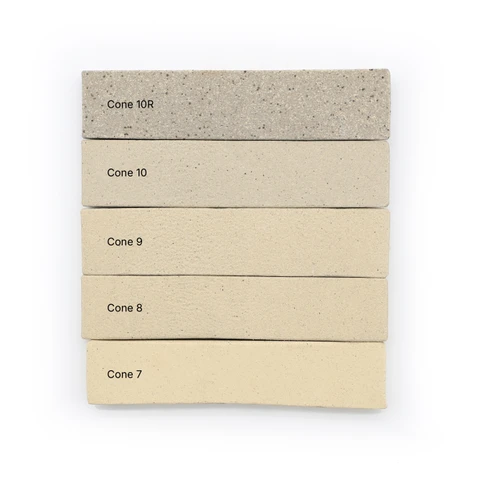
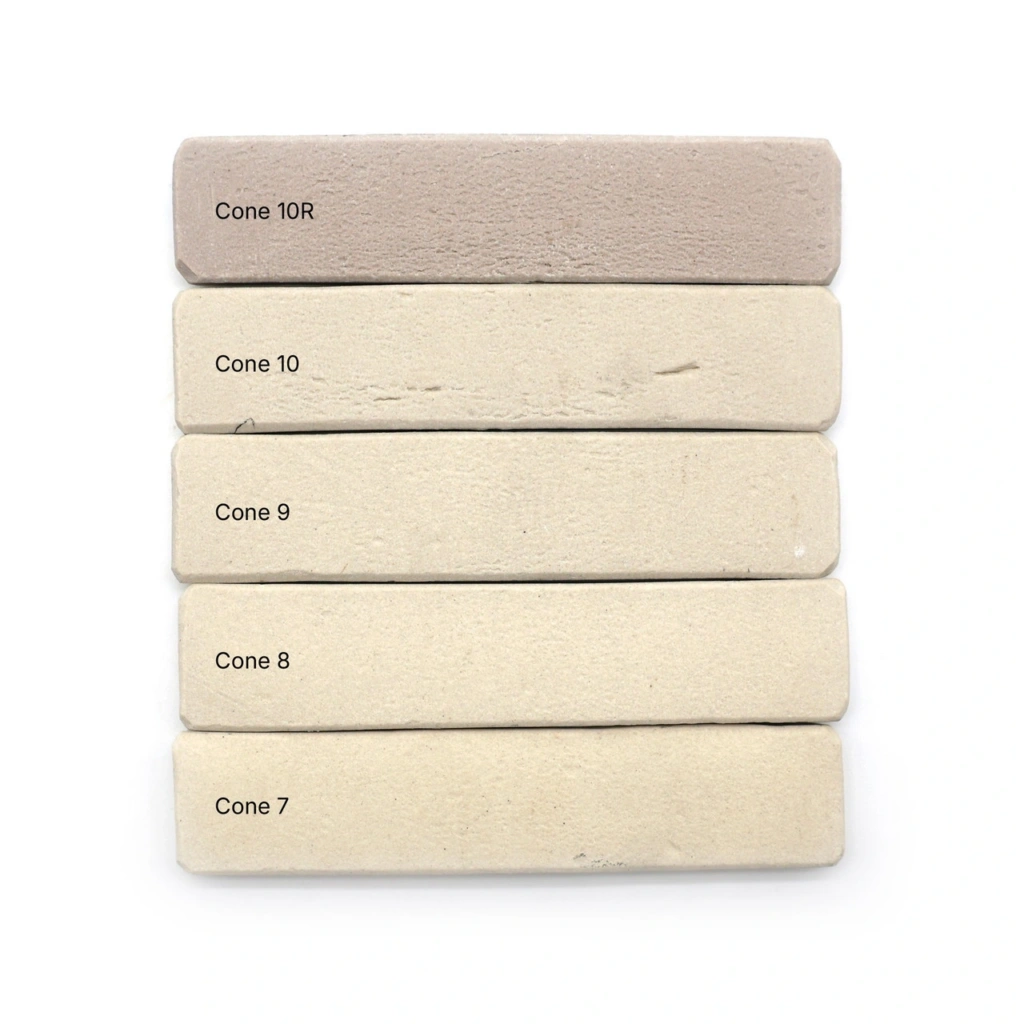
Cone 9 · 10 · 10R – we recommend cone 10 (cone 10 = 1285 °C / 2345 °F). P600 matures at cone 10 in both oxidation and reduction.
Colour
Clean white, in both oxidation and reduction
Shrinkage
Dry 5.6–6.3% · fired 7.5–7.8% at cone 9, 7.7–8.3% at cone 10, 8.0–8.6% at cone 10 reduction
Absorption
Cone 9 0.7–1.0% · cone 10 0.5–0.7% · cone 10 reduction 0.0–0.1%
Every figure is a measured range from the Plainsman lab, not a single nominal number. Cone equivalents are Orton self-supporting cones at 108 °F/hr.
Description
P600 is a high temperature porcelain that fires white in both reduction and oxidation. It is smooth and fine grained, with no visible grain in the fired surface, and it is made for functional ware.
Fired to cone 10 it becomes a dense, fully matured porcelain with a silky surface. Absorption falls to 0.5 to 0.7 percent at cone 10 and to effectively nothing at cone 10 reduction.
Plasticity is medium. P600 is a kaolin porcelain rather than a white stoneware, and it handles differently as a result. It holds a crisp edge and a clean profile well, and it needs more care during drying.
Working properties
- Medium plasticity. P600 throws and hand builds, and it holds crisp edges, well defined detail and clean profiles. It needs more careful working than a white stoneware.
- Give it time to dry evenly. P600 resists water penetration and releases moisture slowly, so dry under cloth and plastic, and allow extra time for large flat forms such as plates.
- Keep the wall thickness consistent through each piece. An even cross section dries evenly, and that is what keeps cracks from opening.
- For secure joins, use a slip with a low water content, press the sections firmly together, and move the joining surfaces laterally against each other so the slip takes hold.
- Straight sided cylinders, goblets with flared bases and bowls with overhung profiles can warp at high fire. Fire them on a level shelf.
Fired colour & cone behaviour
- A clean white finish in either oxidation or reduction, which makes a straightforward ground for a glaze palette.
- Fire to cone 10 in oxidation or reduction for a vitreous body with a smooth, silky surface.
- For functional ware, choose cone 10 to bring P600 to maturity. Below its firing range the body remains incompletely vitrified and absorption is measurable.
Glazes & glaze fit
- P600’s white fired colour provides a clean background that allows glaze colours to read close to true.
- Glazes with a higher thermal expansion than P600 can craze. Adjust and fire the glaze, then test the piece by moving it from boiling water into ice water, and repeat the testing and adjustment until crazing stops.
- Good glaze fit helps preserve the strength of a fully vitrified porcelain. A glaze under tension can reduce that strength. Check for crazing or cracking over several two minute boiling to ice water cycles.
- For decorative slips, start with a P600 base and match the slip’s drying and fired shrinkage to the body.