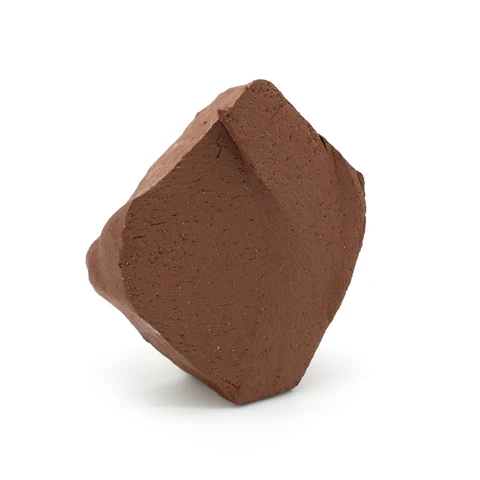




Plainsman Clays | H550

$0
Suggested retail price. In-store prices and availability may vary by location.
High fired, Grey-buff burning, Slightly sandy, Plastic, General purpose, Throwing clay body
High temperature stoneware · grey-buff burning · semi-vitreous · general purpose
Slightly sandy with fair plasticity · strong green strength
Throwing · functional and decorative stoneware
Cone 8 · 9 · 10 – H550 is typically fired in a cone 10 reduction atmosphere (cone 10 = 1285 °C / 2345 °F)
Solid grey with light specking in reduction · solid light grey-buff in oxidation
Dry 6.8–7.8% · fired 5.5–5.9% at cone 8, 5.6–6.0% at cone 9, 5.8–6.3% at cone 10
Cone 8 4.3–4.6% · cone 9 2.2–3.0% · cone 10 2.0–2.4%
Every figure is a measured range from the Plainsman lab, not a single nominal number. Cone equivalents are Orton self-supporting cones at 108 °F/hr.

H550 is a general purpose high-fire stoneware. Slightly sandy, semi-vitreous, and grey-buff burning. It has the particle size distribution to dry relatively fast and the green strength to survive handling while it dries.
H550 is typically fired in a cone 10 reduction atmosphere. In reduction it fires to a solid grey with light specking. In an oxidized atmosphere it fires to a solid light grey-buff colour.