




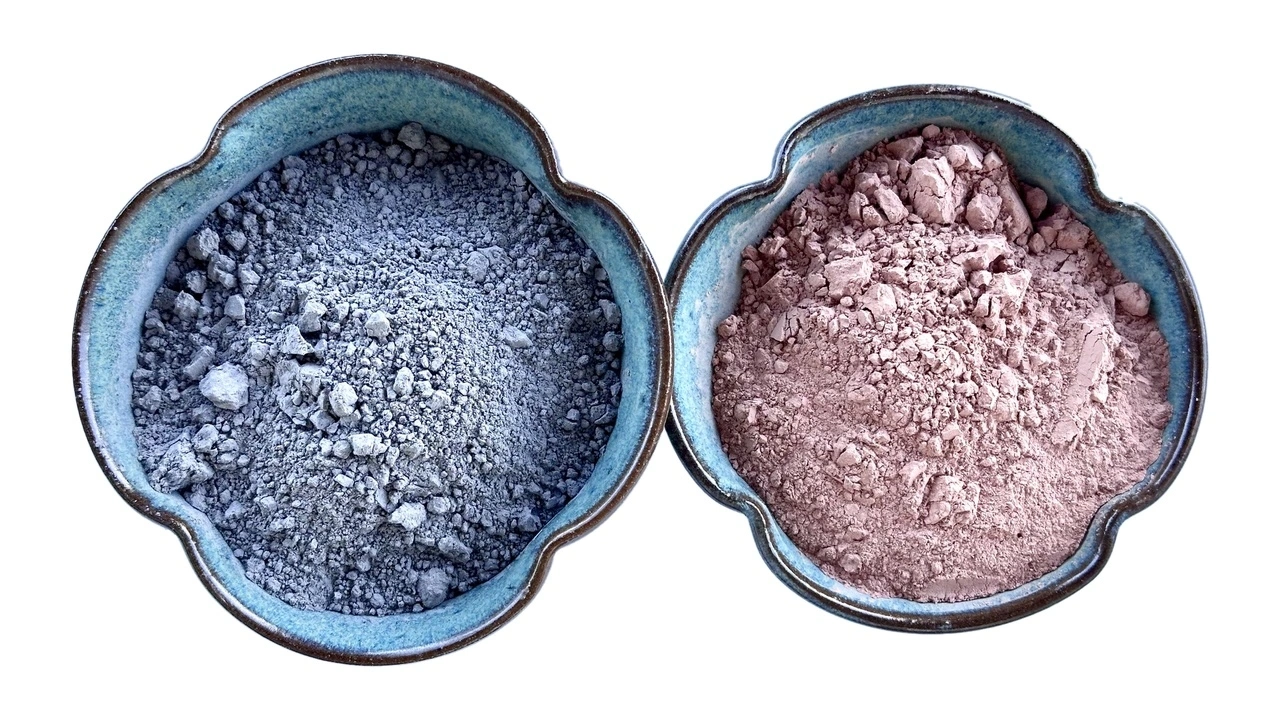
You may have wondered – perhaps it even keeps you up late at night – what exactly Alberta Slip is. Is it a glaze, a clay, or something you can use for slip casting? Many longtime potters know the story of Albany Slip and how, sadly, it became unavailable. Alberta Slip was developed to help fill that void. It was not a perfect one-to-one match, but it came close: its chemistry and fired results were similar enough that potters began substituting Alberta Slip for Albany Slip. Alberta Slip is a clay blend that can be used in glaze recipes or on its own at cone 10 or cone 10 reduction. Despite its name, it is not intended for slip casting or for forming.
Alberta Slip is a versatile base material for many glaze recipes. At cone 10, it can also be used on its own to produce a glossy brown, tenmoku-like surface. To melt properly at cone 6, it requires a boron-based flux such as Frit 3134. Because Alberta Slip is more plastic than the original Albany Slip, recipes containing a large amount of it usually require a portion to be roasted to reduce that plasticity. Without roasting, the glaze coating may crack on the bisque ware, flake off, or contribute to crawling during firing.
Roasting Alberta Slip
If you have never roasted a ceramic material before, don’t worry – it is a simple process, even if it adds one extra step. Learning how to roast a material can be a handy studio skill. Place the Alberta Slip in a bisque bowl or another bisque-fired container, then fire it in a kiln to red heat: 1000°F (538°C). Hold at 1000°F for 20 to 30 minutes, then allow the kiln to cool. The colour change is easy to spot: the Alberta Slip will shift from dark brown to a light pinkish brown. If a recipe calls for 80% Alberta Slip, roast half of that amount. Potters who once-fire their work may find that they need much less roasted material because the glaze is being applied to greenware.
Recipes to get you started
Here are a few popular Alberta Slip glaze recipes to get you started:
Cone 6 Alberta Slip Floating Blue
| Ingredient | Amount |
| Alberta Slip | 40% |
| Alberta Slip, roasted | 40% |
| Frit 3134 | 20% |
| Rutile | 4% |
| Cobalt Carbonate | 2% |
You can omit the cobalt carbonate and still achieve blue, but glaze thickness and cooling rate will need to be carefully controlled. Adding cobalt helps the glaze produce blue more reliably from firing to firing, giving you more consistent results. A slow-cooling cycle is recommended.
Cone 6 Alberta Slip Black Glaze
| Ingredient | Amount |
| Alberta Slip, roasted | 40% |
| Alberta Slip | 33% |
| Frit 3134 | 20% |
| Zircopax | 4% |
| Mason Stain 6666 | 3% |
Cone 10 Tenmoku Glaze
| Ingredient | Amount |
| Alberta Slip | 46% |
| Alberta Slip, roasted | 46% |
| Whiting | 5% |
| Red Iron Oxide | 3% |
Cone 10 Alberta Slip Glossy Brown Glaze
| Ingredient | Amount |
| Alberta Slip, roasted | 60% |
| Alberta Slip | 40% |
| Red Iron Oxide | 1.5% |
We hope these recipes inspire you to explore the versatility of Alberta Slip in your own studio. This is only a starting point, so stay tuned as we share more recipes, testing tips, and ideas in future posts. As always, test each glaze on your clay body and under your firing conditions to ensure it is stable, suitable, and ready for use. Happy glazing!
